Featured

Brench & Chaiphakdi Productions

Finally, brothers, whatever is true, whatever is honourable, whatever is just, whatever is pure, whatever is lovely, whatever is commendable, if there is any excellence, if there is anything worthy of praise, think about these things. – Philippians 4:8

B&C P is a collaborative project between Fr. Matthew Brench and Ms. Parady Chaiphakdi to harness the renaissance of classical Anglicanism taking place at the grassroots level across the world, especially online, and make such writings and wisdom accessible to the faithful, particularly in South East Asia.

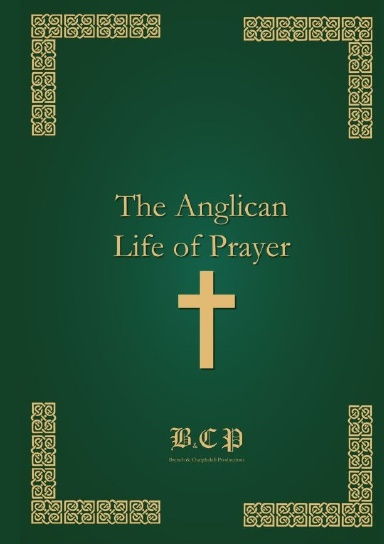
Our premier work will be The Anglican Life of Prayer, which is a modernisation of the 1662 Prayer Book’s Daily Offices of Morning and Evening Prayer. It will contain further excerpts from the 1662 BCP and a glossed edition of the Thirty-Nine Articles of Religion, and is particularly prepared for the Anglican churches in South East Asia.

On this site, Brench and Chaiphakdi also provide periodic insights and encouragements for the use of the daily prayers and the Scripture lessons that accompany them.

Good Friday and Wisdom 2:12-24

As I was reflecting on the related Old Testament prophecies and John’s gospel pertaining to Jesus’ death on Good Friday, I also recalled a related passage from the Apocrypha, the Wisdom of Solomon.

[Note: In Article 6 of the Anglican 39 Articles of Religion states that the Apocrypha isn’t used to establish doctrine but it is good for instructing and example of living a Christian life.]

In Wisdom 2:12-22, there is an interesting connection to Good Friday:

12 “Let us lie in wait for the righteous man,
because he is inconvenient to us and opposes our actions;
he reproaches us for sins against the law,
and accuses us of sins against our training.
13 He professes to have knowledge of God,
and calls himself a child of the Lord.
14 He became to us a reproof of our thoughts;
15 the very sight of him is a burden to us,
because his manner of life is unlike that of others,
and his ways are strange.
16 We are considered by him as something base,
and he avoids our ways as unclean;
he calls the last end of the righteous happy,
and boasts that God is his father.
17 Let us see if his words are true,
and let us test what will happen at the end of his life;
18 for if the righteous man is God’s son, he will help him,
and will deliver him from the hand of his adversaries.
19 Let us test him with insult and torture,
that we may find out how gentle he is,
and make trial of his forbearance.
20 Let us condemn him to a shameful death,
for, according to what he says, he will be protected.”

21 Thus they reasoned, but they were led astray,
for their wickedness blinded them,
22 and they did not know the secret purposes of God,
nor hope for the wages of holiness,
nor discern the prize for blameless souls;

Wisdom 2:12-22 (RSV)

The context of Wisdom 2:12-22 is about how evil men oppose God by disregarding his justice through their words and deeds. These involves them plotting to harm a righteous man because of his rebuke to them and to test his claim of being the Son of God. This righteous man in Wisdom chapter 2 is not named, but when it is read in understanding of the gospel, that righteous man is actually Jesus Christ.

Next, Wisdom 2 ends with a warning about death in verses 23 to 24:

23 for God created man for incorruption,
and made him in the image of his own eternity,
24 but through the devil’s envy death entered the world,
and those who belong to his party experience it.

Wisdom 2:23-24 (RSV)

As an Anglican Christian, I think Wisdom 2:23-24 is to be understood as an instruction by way of a negative example, to the permanent death which will happen to evil people who reject God, who do not acknowledge Jesus Christ as Son of God and their Lord and Saviour. This same warning is also given by Jesus Christ in the gospels to repent from our evil ways and believe in him as God and King or to face eternal death.

Given the warning, we have to examine ourselves in a few ways:

  1. Do I know the secret purposes of God which are revealed in Jesus Christ’s life and teaching as testified of in the Gospels?
  2. Is there anything wicked that I need to repent of and turn to Jesus Christ for help?
  3. Do I hope for “the wages of holiness” and “the prize of blameless souls” as sealed by the death and resurrection of Jesus Christ?

The Circumcision of Christ

Happy New Year! And for those who celebrate, Blessed Feast of the Circumcision of Christ.

This celebration commemorates Christ’s circumcision according to Jewish law eight days after being born. In other words, Jesus Christ who is God and therefore the Lawgiver to Moses, was born under the Law and circumcised according to the Law in order to redeem us through His keeping of the same Law so that we might be adopted as sons of God (Galatians 4:4-5). And so as sons of God, let us deny the wordly and fleshy desires and subject ourselves to God.

The Collect
The Classic 1662 BCP CollectB&C P’s modernisation
Almighty God, who madest thy blessed Son to be circumcised, and obedient to the law for man; Grant us the true Circumcision of the Spirit; that, our hearts, and all our members, being mortified from all worldly and carnal lusts, we may in all things obey thy blessed will; through the same thy Son Jesus Christ our Lord. Amen.Almighty God, who made your blessed Son to be circumcised, and obedient to the Law for man: Grant us true circumcision of the Spirit; that, our hearts and all our members being mortified from all worldly and carnal lusts, we may in all things obey your blessed will; through the same, your Son, Jesus Christ our Lord. Amen.
According to the 1662 BCP rubrics, this collect together with the Epistle and Gospel readings are to be said from 1st January until 5th January
The Epistle Reading

blessed is the man against whom the Lord will not count his sin.”

Is this blessing then only for the circumcised, or also for the uncircumcised? For we say that faith was counted to Abraham as righteousness. How then was it counted to him? Was it before or after he had been circumcised? It was not after, but before he was circumcised. He received the sign of circumcision as a seal of the righteousness that he had by faith while he was still uncircumcised. The purpose was to make him the father of all who believe without being circumcised, so that righteousness would be counted to them as well, and to make him the father of the circumcised who are not merely circumcised but who also walk in the footsteps of the faith that our father Abraham had before he was circumcised.

For the promise to Abraham and his offspring that he would be heir of the world did not come through the law but through the righteousness of faith. For if it is the adherents of the law who are to be the heirs, faith is null and the promise is void.

Romans 4:8-14 (ESV)
The Gospel Reading

When the angels went away from them into heaven, the shepherds said to one another, “Let us go over to Bethlehem and see this thing that has happened, which the Lord has made known to us.” And they went with haste and found Mary and Joseph, and the baby lying in a manger. And when they saw it, they made known the saying that had been told them concerning this child. And all who heard it wondered at what the shepherds told them. But Mary treasured up all these things, pondering them in her heart. And the shepherds returned, glorifying and praising God for all they had heard and seen, as it had been told them.

And at the end of eight days, when he was circumcised, he was called Jesus, the name given by the angel before he was conceived in the womb.

Luke 2:15-21 (ESV)

Main Readings for All Saints’ Day

At the start of November, I have been talking with friends from around the world and from different denominations on All Saints’ Day and getting to know what part of the service they like or appreciate. It was then that I began to notice that there were some overlaps for the main readings of the day between the 1662 and the modern lectionaries and decided to take a look at them to appreciate the different angles of celebration.

The readings for All Saints’ Day in this blog post are from the 1662 BCP, the Revised Common Lectionary (RCL) and the Anglican Church of the Province of South East Asia. The latter two lectionaries use a three-year cycle with the provincial lectionary not having the Apocryphal readings.

Readings in the 1662 BCP

There are two readings in the 1662 for the main service and they both come from the New Testament: Revelation 7:2-12 and Matthew 5:1-12 . The readings are about the great gathering of God’s people worshipping before His throne in heaven and Jesus’ promise reward in heaven for enduring persecution in His name.

Both readings are carried over into the three-year lectionaries.

Readings in the RCL & the Provincial Lectionary

For the three-year lectionaries, the number of readings increased to four. The readings which are linked to a page with all the readings are as follows:

The first reading shares the same chapter with the 1662 but skips the repeated twelve thousand of each of the twelve tribes of Israel. It focuses upon what saints in heaven do, which is worshipping God.

The Psalm exhorts us believers (holy ones/saints) to praise the Lord at all times together with the psalmist and to put our hope in God who will protect us, meet our needs and redeems us.

1 John 3:1-3 calls us to see the extent of the love of the Father that we are called the children of God *now*.  As we await our transformation to be like Jesus Christ, we are to purify ourselves by imitating Christ, who is pure.

The gospel of Matthew follows the same passage as the 1662. The reading also seems to focus on living believers to hold on to Jesus’ teachings and hope in His promises.

The first reading can either be Wisdom or Isaiah for RCL but in the provincial lectionary, there is only Isaiah. Wisdom and Isaiah carry the same focus – God vindicates the righteous ones through resurrection and they will rejoice in His salvation in His presence. (As a side note, there seems to be a trace of the 1662 influence in having Wisdom 3:1-9 as an optional reading as it is the first lesson for the 1662 Morning Prayer on 1st November.)

The Psalm, Epistle and Gospel also focus on the same themes as the first reading.

The first reading emphasises on the saints inheriting an everlasting kingdom. The rest of the readings have the same emphasis.

One thing of note is that the Gospel reading for Year C is Luke’s account of the Beatitudes in the Gospel reading for Year A, Matthew 5:1-12. Here is a short list of what is different in the passage of Luke 6:20-31 compared to Matthew 5:1-12:

  1. There are blessings and woes. Each of the woes are the opposite of the blessings in verses 20 to 23.
  2. How to love those who hate us in verses 27 to 31.
Summary

Ultimately, all the readings are a good picture of how we worship God during Communion where we “with the angels and archangels, and with all the company of heaven” proclaim the Father’s great and glorious name through Jesus Christ and the Holy Spirit. So, when we worship God, remember that it is not just the living saints (you, the people around you) and our Triune God in a place, but also with the angels and all the saints who have died. And when our Lord and Master, Jesus Christ returns, we all will be transformed to be like him and be united with each other and God.
Reflection: The Transfiguration Collect

The Transfiguration of Our Lord is recorded in Matthew 17:1-13, Mark 9:2-13 and Luke 9:28-36 but is among the feasts which are not observed in the 1662 Book of Common Prayer. It is now included in modern Prayer Books since 1928 in the US.

The collect for this feast in The Anglican Life of Prayer is from ACNA’s 2019 BCP which goes:

O God, who on the holy mount revealed to chosen witnesses your well-beloved Son, wonderfully transfigured, in raiment white and glistening: Mercifully grant that we, being delivered from the disquietude of this world, may by faith behold the King in his beauty; who with you and the Holy Spirit lives and reigns, one God, for ever and ever. Amen.

What stood out to me in the collect is the part of asking God to deliver us from the disquietude of this world. When I first came across this collect during COVID-tide, there were so many changes and uncertainties which caused me a great deal of worry. When I read this collect, I realised it spoke to me in the middle of my anxiety, my disquietude, when my world and the whole world was turned upside down. This collect taught me to be still, follow God’s instruction to listen to Jesus, drown out the noise of the world and rest in the peace of God that surpasses all understanding. In that rest, God has guarded my heart and mind in the midst of turmoil and brought me through a rough season of life. Now, whenever I am anxious, this is one of my go-to collects as it reminds me of God’s goodness and faithfulness in the hope of finally beholding Christ the King in his holy beauty forever in the company of his saints.

FAQ: Why are some chapters skipped in Daily Office readings?

One of the most frequently asked questions concerning the Daily Office is: Why are some chapters of Scripture are skipped?

This blog post by Fr. Matthew Brench deals with that question with particular focus on the 2019 Lectionary. It even provides a quick list about what has been omitted in the 2019 Lectionary and links with useful notes.

I think his blog post is useful in understanding some of the issues and factors which are considered when coming up with a lectionary. Also handy are the suggestions on how to make up for the missing readings in the 2019 Lectionary.

Anthems & Canticles: Pascha Nostrum

Blessed Easter! I hope all of you had an enjoyable Easter in church. One of the things I enjoyed on Easter Sunday is the singing of the Easter Anthem or Pascha Nostrum. But before I start waxing lyrical about it, here’s a quick introduction about some words:

An anthem or canticle is a hymn that uses parts of the Bible. It is best sung during worship although it can be said.

Pascha Nostrum means “Our Passover” in Latin.

The Pascha Nostrum is a combination of a few New Testament verses which are 1 Corinthians 5:7 to 8, Romans 6:9 to 11, and 1 Corinthians 15:20 to 22.

Here is the Pascha Nostrum in the 1662 Book of Common Prayer:
Christ our passover is sacrificed for us : therefore let us keep the feast; Not with the old leaven, nor with the leaven of malice and wickedness : but with the unleavened bread of sincerity and truth. 1 Cor. v. 7
    Christ being raised from the dead dieth no more : death hath no more dominion over him. For in that he died, he died unto sin once : but in that he liveth, he liveth unto God. Likewise reckon ye also yourselves to be dead indeed unto sin : but alive unto God through Jesus Christ our Lord. Rom. vi. 9
    Christ is risen from the dead : and become the first-fruits of them that slept. For since by man came death : by man came also the resurrection of the dead. For as in Adam all die : even so in Christ shall all be made alive. 1 Cor. xv. 20.
    Glory be to the Father, and to the Son : and to the Holy Ghost; As it was in the beginning, is now, and ever shall be : world without end. Amen.

There are quite a few musical settings for the Pascha Nostrum and which you can check out (and sing/chant along prayerfully).

Saint Thomas the Apostle

As Christians, there are situations where doubt creeps in and there is some guilt that comes with it for doubting God. But Scripture shows us that God is patient and gracious in bearing with doubts and He transforms doubt into faith. Let us therefore take heart in remembering St Thomas where God patiently worked through his doubt and strengthened his faith in His Son, our Lord Jesus Christ.

Collects

Classic 1662 CollectB&C P’s modernisation
Almighty and everliving God, who for the more confirmation of the faith didst suffer thy holy Apostle Thomas to be doubtful in thy Son’s resurrection; Grant us so perfectly, and without all doubt, to believe in thy Son Jesus Christ, that our faith in thy sight may never be reproved. Hear us, O Lord, through the same Jesus Christ, to whom, with thee and the Holy Ghost, be all honour and glory, now and for evermore. Amen.Almighty and everliving God, who patiently bore with your holy Apostle Thomas’ doubt in your Son’s resurrection in order to further confirm his faith: Grant us so perfectly and without all doubt to believe in your Son Jesus Christ, that our faith may never be found wanting in your sight. Hear us, O Lord, through the same Jesus Christ, to whom, with you and the Holy Spirit, be all honour and glory, now and for evermore. Amen.
Almighty God, give us grace that we may cast away the works of darkness, and put upon us the armour of light, now in the time of this mortal life in which thy Son Jesus Christ came to visit us in great humility; that in the last day, when he shall come again in his glorious majesty to judge both the quick and the dead, we may rise to the life immortal; through him who liveth and reigneth with thee and the Holy Ghost, one God, now and for ever. Amen.Almighty God, give us grace to cast away the works of darkness, and put upon us the armour of light, now in the time of this mortal life in which your Son Jesus Christ came to visit us in great humility; that in the last day, when he shall come again in his glorious majesty to judge both the living and the dead, we may rise to the life immortal; through him who lives and reigns with you and the Holy Spirit, one God, now and for ever.  Amen.

The Epistle

So then you are no longer strangers and aliens, but you are fellow citizens with the saints and members of the household of God, built on the foundation of the apostles and prophets, Christ Jesus himself being the cornerstone, in whom the whole structure, being joined together, grows into a holy temple in the Lord. In him you also are being built together into a dwelling place for God by the Spirit.

Ephesians 2:19-22 (ESV)

The Gospel

Now Thomas, one of the twelve, called the Twin, was not with them when Jesus came. So the other disciples told him, “We have seen the Lord.” But he said to them, “Unless I see in his hands the mark of the nails, and place my finger into the mark of the nails, and place my hand into his side, I will never believe.”

Eight days later, his disciples were inside again, and Thomas was with them. Although the doors were locked, Jesus came and stood among them and said, “Peace be with you.” Then he said to Thomas, “Put your finger here, and see my hands; and put out your hand, and place it in my side. Do not disbelieve, but believe.” Thomas answered him, “My Lord and my God!” Jesus said to him, “Have you believed because you have seen me? Blessed are those who have not seen and yet have believed.”

Now Jesus did many other signs in the presence of the disciples, which are not written in this book; but these are written so that you may believe that Jesus is the Christ, the Son of God, and that by believing you may have life in his name.

John 20:24-31 (ESV)

Saint Andrew’s Day

We now commemorate the first saint for the year! It is fitting for an apostle who was the very first one called by our Lord, Jesus Christ.

For today, the collects/prayers will stack up where we have the collect for St Andrew’s Day and the collect for the First Sunday in Advent:

Classic 1662 CollectB&C P’s modernisation
Almighty God, who didst give such grace unto thy holy Apostle Saint Andrew, that he readily obeyed the calling of thy Son Jesus Christ, and followed him without delay; Grant unto us all, that we, being called by thy holy Word, may forthwith give up ourselves obediently to fulfil the holy commandments; through the same Jesus Christ our Lord. Amen.Almighty God, you gave such grace to your holy Apostle Saint Andrew that he readily obeyed the call of your Son Jesus Christ, and followed him without delay [and brought his brother with him]: Give us, who are called by your holy Word, grace to give ourselves up obediently to fulfil your holy commandments; through the same Jesus Christ our Lord, who lives and reigns with you and the Holy Spirit, one God, for ever and ever.  Amen.
*NOTE: The phrase in brackets has been added from a modern version for theological clarity.
Almighty God, give us grace that we may cast away the works of darkness, and put upon us the armour of light, now in the time of this mortal life in which thy Son Jesus Christ came to visit us in great humility; that in the last day, when he shall come again in his glorious majesty to judge both the quick and the dead, we may rise to the life immortal; through him who liveth and reigneth with thee and the Holy Ghost, one God, now and for ever. Amen.Almighty God, give us grace to cast away the works of darkness, and put upon us the armour of light, now in the time of this mortal life in which your Son Jesus Christ came to visit us in great humility; that in the last day, when he shall come again in his glorious majesty to judge both the living and the dead, we may rise to the life immortal; through him who lives and reigns with you and the Holy Spirit, one God, now and for ever.  Amen.

The Epistle Reading

…if you confess with your mouth that Jesus is Lord and believe in your heart that God raised him from the dead, you will be saved. For with the heart one believes and is justified, and with the mouth one confesses and is saved. For the Scripture says, “Everyone who believes in him will not be put to shame.” For there is no distinction between Jew and Greek; for the same Lord is Lord of all, bestowing his riches on all who call on him. For “everyone who calls on the name of the Lord will be saved.”

How then will they call on him in whom they have not believed? And how are they to believe in him of whom they have never heard? And how are they to hear without someone preaching? And how are they to preach unless they are sent? As it is written, “How beautiful are the feet of those who preach the good news!” But they have not all obeyed the gospel. For Isaiah says, “Lord, who has believed what he has heard from us?” So faith comes from hearing, and hearing through the word of Christ.

But I ask, have they not heard? Indeed they have, for

“Their voice has gone out to all the earth,
    and their words to the ends of the world.”

But I ask, did Israel not understand? First Moses says,

“I will make you jealous of those who are not a nation;
    with a foolish nation I will make you angry.”

Then Isaiah is so bold as to say,

“I have been found by those who did not seek me;
    I have shown myself to those who did not ask for me.”

But of Israel he says, “All day long I have held out my hands to a disobedient and contrary people.”

Romans 10:9-21 (ESV)

The Gospel Reading

While walking by the Sea of Galilee, he saw two brothers, Simon (who is called Peter) and Andrew his brother, casting a net into the sea, for they were fishermen. And he said to them, “Follow me, and I will make you fishers of men.” Immediately they left their nets and followed him. And going on from there he saw two other brothers, James the son of Zebedee and John his brother, in the boat with Zebedee their father, mending their nets, and he called them. Immediately they left the boat and their father and followed him.

Matthew 4:18-22 (ESV)

The First Sunday in Advent

We are now in the season of Advent which is also the liturgical new year. Throughout Advent, we prepare ourselves for Jesus’ first and second arrival by repenting of our sins. This is reflected in the collect for the season:

Classic 1662 CollectB&C P’s modernisation
Almighty God, give us grace that we may cast away the works of darkness, and put upon us the armour of light, now in the time of this mortal life in which thy Son Jesus Christ came to visit us in great humility; that in the last day, when he shall come again in his glorious majesty to judge both the quick and the dead, we may rise to the life immortal; through him who liveth and reigneth with thee and the Holy Ghost, one God, now and for ever. Amen.Almighty God, give us grace to cast away the works of darkness, and put upon us the armour of light, now in the time of this mortal life in which your Son Jesus Christ came to visit us in great humility; that in the last day, when he shall come again in his glorious majesty to judge both the living and the dead, we may rise to the life immortal; through him who lives and reigns with you and the Holy Spirit, one God, now and for ever.  Amen.
Collect for First Sunday in Advent

Epistle Reading

Owe no one anything, except to love each other, for the one who loves another has fulfilled the law. For the commandments, “You shall not commit adultery, You shall not murder, You shall not steal, You shall not covet,” and any other commandment, are summed up in this word: “You shall love your neighbor as yourself.” Love does no wrong to a neighbor; therefore love is the fulfilling of the law.

Besides this you know the time, that the hour has come for you to wake from sleep. For salvation is nearer to us now than when we first believed. The night is far gone; the day is at hand. So then let us cast off the works of darkness and put on the armor of light. Let us walk properly as in the daytime, not in orgies and drunkenness, not in sexual immorality and sensuality, not in quarreling and jealousy. But put on the Lord Jesus Christ, and make no provision for the flesh, to gratify its desires.

Romans 13:8-14 (ESV)

Gospel Reading

Now when they drew near to Jerusalem and came to Bethphage, to the Mount of Olives, then Jesus sent two disciples, saying to them, “Go into the village in front of you, and immediately you will find a donkey tied, and a colt with her. Untie them and bring them to me. If anyone says anything to you, you shall say, ‘The Lord needs them,’ and he will send them at once.” This took place to fulfill what was spoken by the prophet, saying,

“Say to the daughter of Zion,
‘Behold, your king is coming to you,
    humble, and mounted on a donkey,
    on a colt, the foal of a beast of burden.’”

The disciples went and did as Jesus had directed them. They brought the donkey and the colt and put on them their cloaks, and he sat on them. Most of the crowd spread their cloaks on the road, and others cut branches from the trees and spread them on the road. And the crowds that went before him and that followed him were shouting, “Hosanna to the Son of David! Blessed is he who comes in the name of the Lord! Hosanna in the highest!” And when he entered Jerusalem, the whole city was stirred up, saying, “Who is this?” And the crowds said, “This is the prophet Jesus, from Nazareth of Galilee.”

And Jesus entered the temple and drove out all who sold and bought in the temple, and he overturned the tables of the money-changers and the seats of those who sold pigeons. He said to them, “It is written, ‘My house shall be called a house of prayer,’ but you make it a den of robbers.”

Matthew 21:1-13 (ESV)

Additional link

If you would like a short reflection to accompany the collect and readings, click here.