At the start of November, I have been talking with friends from around the world and from different denominations on All Saints’ Day and getting to know what part of the service they like or appreciate. It was then that I began to notice that there were some overlaps for the main readings of the day between the 1662 and the modern lectionaries and decided to take a look at them to appreciate the different angles of celebration.
The readings for All Saints’ Day in this blog post are from the 1662 BCP, the Revised Common Lectionary (RCL) and the Anglican Church of the Province of South East Asia. The latter two lectionaries use a three-year cycle with the provincial lectionary not having the Apocryphal readings.
Readings in the 1662 BCP
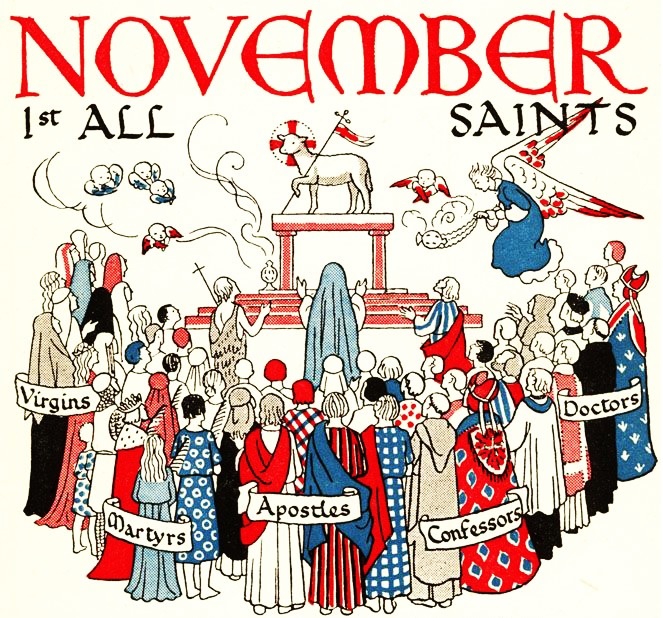
There are two readings in the 1662 for the main service and they both come from the New Testament: Revelation 7:2-12 and Matthew 5:1-12 . The readings are about the great gathering of God’s people worshipping before His throne in heaven and Jesus’ promise reward in heaven for enduring persecution in His name.
Both readings are carried over into the three-year lectionaries.
Readings in the RCL & the Provincial Lectionary
For the three-year lectionaries, the number of readings increased to four. The readings which are linked to a page with all the readings are as follows:
The first reading shares the same chapter with the 1662 but skips the repeated twelve thousand of each of the twelve tribes of Israel. It focuses upon what saints in heaven do, which is worshipping God.
The Psalm exhorts us believers (holy ones/saints) to praise the Lord at all times together with the psalmist and to put our hope in God who will protect us, meet our needs and redeems us.
1 John 3:1-3 calls us to see the extent of the love of the Father that we are called the children of God *now*. As we await our transformation to be like Jesus Christ, we are to purify ourselves by imitating Christ, who is pure.
The gospel of Matthew follows the same passage as the 1662. The reading also seems to focus on living believers to hold on to Jesus’ teachings and hope in His promises.
The first reading can either be Wisdom or Isaiah for RCL but in the provincial lectionary, there is only Isaiah. Wisdom and Isaiah carry the same focus – God vindicates the righteous ones through resurrection and they will rejoice in His salvation in His presence. (As a side note, there seems to be a trace of the 1662 influence in having Wisdom 3:1-9 as an optional reading as it is the first lesson for the 1662 Morning Prayer on 1st November.)
The Psalm, Epistle and Gospel also focus on the same themes as the first reading.
The first reading emphasises on the saints inheriting an everlasting kingdom. The rest of the readings have the same emphasis.
One thing of note is that the Gospel reading for Year C is Luke’s account of the Beatitudes in the Gospel reading for Year A, Matthew 5:1-12. Here is a short list of what is different in the passage of Luke 6:20-31 compared to Matthew 5:1-12:
- There are blessings and woes. Each of the woes are the opposite of the blessings in verses 20 to 23.
- How to love those who hate us in verses 27 to 31.
Summary
Ultimately, all the readings are a good picture of how we worship God during Communion where we “with the angels and archangels, and with all the company of heaven” proclaim the Father’s great and glorious name through Jesus Christ and the Holy Spirit. So, when we worship God, remember that it is not just the living saints (you, the people around you) and our Triune God in a place, but also with the angels and all the saints who have died. And when our Lord and Master, Jesus Christ returns, we all will be transformed to be like him and be united with each other and God.
 B&C Productions