The Transfiguration of Our Lord is recorded in Matthew 17:1-13, Mark 9:2-13 and Luke 9:28-36 but is among the feasts which are not observed in the 1662 Book of Common Prayer. It is now included in modern Prayer Books since 1928 in the US.
The collect for this feast in The Anglican Life of Prayer is from ACNA’s 2019 BCP which goes:
O God, who on the holy mount revealed to chosen witnesses your well-beloved Son, wonderfully transfigured, in raiment white and glistening: Mercifully grant that we, being delivered from the disquietude of this world, may by faith behold the King in his beauty; who with you and the Holy Spirit lives and reigns, one God, for ever and ever. Amen.
What stood out to me in the collect is the part of asking God to deliver us from the disquietude of this world. When I first came across this collect during COVID-tide, there were so many changes and uncertainties which caused me a great deal of worry. When I read this collect, I realised it spoke to me in the middle of my anxiety, my disquietude, when my world and the whole world was turned upside down. This collect taught me to be still, follow God’s instruction to listen to Jesus, drown out the noise of the world and rest in the peace of God that surpasses all understanding. In that rest, God has guarded my heart and mind in the midst of turmoil and brought me through a rough season of life. Now, whenever I am anxious, this is one of my go-to collects as it reminds me of God’s goodness and faithfulness in the hope of finally beholding Christ the King in his holy beauty forever in the company of his saints.
It so happens that this year is where All Saints’ Day falls in the week of the Twentieth Sunday After Trinity which allowed me to read both collects together:
1662 BCP
B&C P’s modernisation
Collect for the Twentieth Sunday After Trinity
O ALMIGHTY and most merciful God, of thy bountiful goodness keep us, we beseech thee, from all things that may hurt us; that we, being ready both in body and soul, may cheerfully accomplish those things that though wouldest have done; through Jesus Christ our Lord. Amen.
Almighty and most merciful God, in your bountiful goodness keep us, we pray, from all things that may hurt us; that we, being ready both in mind and body, may cheerfully accomplish those things which are according to your will; through Jesus Christ our Lord, who lives and reigns with you and the Holy Spirit, one God, now and for ever. Amen.
Collect for All Saints’ Day
O ALMIGHTY God, who hast knit together thine elect in one communion and fellowship, in the mystical body of thy Son Christ our Lord; Grant us grace so to follow thy blessed Saints in all virtuous and godly living, that we may come to those unspeakable joys, which thou hast prepared for them that unfeignedly love thee; through Jesus Christ our Lord. Amen.
O Almighty God, who has knit together your elect in one communion and fellowship in the mystical Body of your Son Christ our Lord: Grant us grace so to follow your blessed Saints in all virtuous and godly living, that we may come to those indescribable joys that you have prepared for those who truly love you; through Jesus Christ our Lord, who with you and the Holy Spirit lives and reigns, one God, in glory everlasting. Amen.
After reading them, I noticed that both collects have a common theme which is preservation of the elect or saints in different ways in preparation for Advent.
The Collect for the Twentieth Sunday After Trinity
This collect for the week emphasises the present moment for the benefit in the future by beseeching God to preserve us “from all things that may hurt us” through his grace. The hurt mentioned in the prayer may refer to “stumbling” in Jude 1:24. It is not just from bodily harm that we need to be protected, but in particular spiritual harm which can jeopardise the important things – God’s glory, our relationship with Him and mars our witness to Him in the world.
The purpose of this protection is in the second part of the collect, “that we, being ready both in body and soul [mind and body], may cheerfully accomplish those things which are according to your will”. The preparation in body and soul or mind and body to do the good works which God has prepared for us (Ephesians 2:10) is just like training and equipping oneself like a soldier in Ephesians 6:10-20. It also shows that God’s grace is shown in tangible, physical ways to help us to do His will and endure evil.
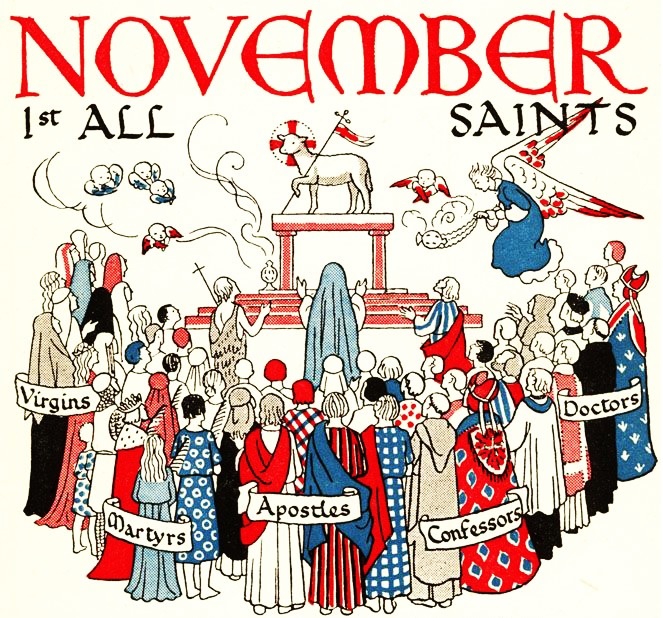
The Collect for All Saints’ Day
The collect for today links the past with the present and future. The elect in the collect refers to believers in Christ or saints, chosen before the foundation of the world, transcending place and time (Ephesians 1:3-5, 1 Corinthians 1:1-3). Then, the prayer focuses on the present time, to us, asking God to help us emulate the saints with us in the present time and those who have gone before us in holiness and godliness. The chief end of which is for all the saints to see God’s promise of hope to be realised when our Lord and Saviour Jesus Christ returns to rule (Ephesians 1:17-23).
This is a short reflection of Psalms 108 and 110 which are appointed for the Morning Prayer according to the Book of Common Prayer 2019’s 60-day Psalm cycle.
Psalm 108 opens with praises in the first four verses before changing into a prayer. What stands out is the psalmist promising God that he will give thanks and praise to him among the gentile nations before changing to a prayer for God to exalt himself and to deliver his people from the enemy. It ends with a plea for God’s help as help from mere mortals are useless and then firmly declaring that God will defeat their enemies and it is only by being with him that their victory is certain.
The idea of God defeating the enemies then flows into the next psalm, Psalm 110 starting with: “The Lord said unto my Lord, “Sit at my right hand,* until I make your enemies your footstool.”“
From the lens of a Jew at that time, it is God’s promise to David and his house where David’s rule is happening while enemies are surrounding him. Then, the Lord acts by smiting their enemies and judging them, and will victoriously lift up his head.
As Christians, where we know that Jesus Christ has lived, suffered and died on the cross before being resurrected and then ascended to the right hand of God (Mark 16:9), these two psalms remind us that God is with us and that Jesus reigns even when it does not seem so currently. They also remind us of God’s promises that Jesus will return, judging the earth and bringing peace.
 B&C Productions